Italian semiconductor testing equipment manufacturer Technoprobe is set to join Italy’s premier FTSE MIB blue-chip index, replacing utility group Hera, following a 70% year-to-date surge in its share price driven by explosive demand for artificial intelligence (AI) hardware, according to an ETTelecom report. The index rebalancing, expected to be confirmed by FTSE Russell on September 2, 2026, is a direct signal to global telecom infrastructure investors of the critical and growing role of advanced semiconductor manufacturing and testing in enabling next-generation AI workloads, 5G-Advanced, and cloud data center networks. For telecom operators and network equipment providers, this move underscores the escalating strategic importance of the semiconductor supply chain, particularly for high-bandwidth, low-latency components essential for AI-driven network automation, optical transport, and edge compute.
Technoprobe’s Core Technology: Enabling Advanced Semiconductor Packaging for AI and HPC

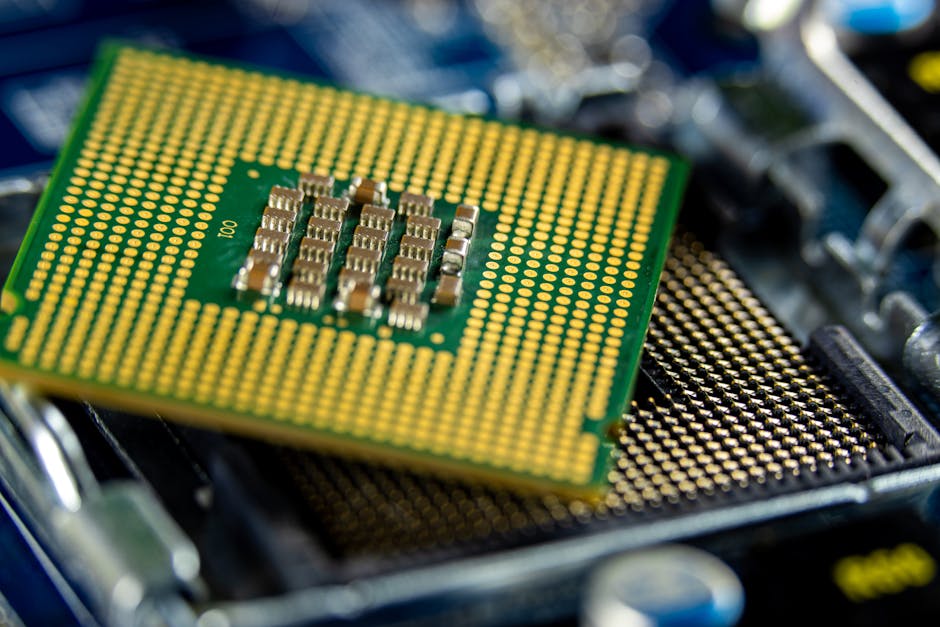
Technoprobe, headquartered in Cernusco Lombardone, Italy, is a world leader in the design and production of advanced probe cards and testing interfaces for semiconductor wafers. These components are not generic; they are critical for testing high-performance chips used in AI accelerators, data center CPUs/GPUs, and advanced networking silicon. The company’s 2026 rally is intrinsically linked to the AI boom, as its technology enables the testing of complex 2.5D and 3D chiplet architectures that are becoming standard for AI processors from leaders like NVIDIA, AMD, and Intel. This includes systems-on-chip (SoCs) that integrate high-bandwidth memory (HBM) stacks—a key bottleneck and cost driver in AI server performance.
From a telecom infrastructure perspective, the demand signals are clear. The move to AI-native networks, Open RAN, and disaggregated hardware is pushing network silicon toward greater complexity, higher pin counts, and more stringent performance requirements. Technoprobe’s probe cards are essential for validating the yield and performance of these chips before they are packaged and deployed in routers, switches, and baseband units. The company’s projected entry into the FTSE MIB, with a market capitalization now exceeding €7.5 billion, reflects investor conviction that the AI infrastructure build-out is a multi-year cycle, with semiconductor test as a high-value, enabling choke point. This contrasts with the exit of Hera, a multi-utility, indicating a market shift in Italy toward high-tech industrial champions over traditional regulated assets.
Impact on Telecom Equipment Supply Chain and Network Capex Strategy
The ascent of a semiconductor testing firm to blue-chip status has direct implications for the telecom equipment and network infrastructure ecosystem. Firstly, it highlights supply chain concentration risks and cost pressures. Companies like Ericsson, Nokia, Huawei, and Cisco, along with their optical and chipset suppliers (Marvell, Broadcom, Intel), depend on a robust and innovative testing segment to ensure component reliability and manage production costs. Any bottleneck or price inflation at the probe card level can ripple through to delays and increased capex for network operators.
Secondly, for Mobile Network Operators (MNOs) and cloud providers building AI-ready infrastructure, this trend validates the need to factor semiconductor ecosystem health into long-term planning. The performance leaps promised by 5G-Advanced (3GPP Release 18/19) and future 6G in areas like integrated sensing, AI/ML at the RAN, and extreme throughput will be gated by underlying chip technology. Investment flowing into firms like Technoprobe supports the R&D required to test next-generation semiconductor materials (e.g., silicon photonics for optical interconnects) and more integrated radio chipsets. Telecom operators must engage with their equipment vendors on technology roadmaps and supply chain resilience, understanding that the AI hardware stack now begins at the wafer test level.
Finally, this index change will likely increase institutional investor scrutiny on the broader “picks and shovels” segment of the AI and telecom infrastructure market. It may drive further capital towards European and global firms specializing in semiconductor manufacturing equipment (ASML), advanced packaging (BE Semiconductor), and specialty materials. For telecom-focused private equity and infrastructure funds, this signals an adjacent investment thesis beyond fiber and towers, into the foundational technologies enabling network intelligence.
Strategic Implications for European Telecom and Global Infrastructure Competition
Technoprobe’s rise occurs within the context of intense global competition for semiconductor sovereignty and AI leadership. The European Union’s Chips Act aims to double the EU’s share of global semiconductor production to 20% by 2030. Technoprobe, as a critical enabler located within the EU, represents a strategic asset in this supply chain. Its prominence on the FTSE MIB provides greater visibility and potentially easier access to capital for expansion, aligning with broader European industrial policy goals.
For European telecom operators—such as Vodafone, Deutsche Telekom, Orange, and Telecom Italia—this development is a double-edged sword. On one hand, a stronger, more innovative European semiconductor ecosystem could reduce over-reliance on Asian and American foundries for critical networking components, enhancing strategic autonomy. On the other hand, the massive capital flowing into AI-specific silicon could divert R&D and manufacturing capacity away from more traditional telecom-specific chips, potentially creating scarcity or prioritizing design wins for cloud giants over network equipment providers. Operators must advocate for a balanced chip strategy that serves both hyperscale AI and carrier-grade network reliability needs.
Globally, the trend mirrors similar movements in other indices, where semiconductor capital equipment firms have gained prominence. It reinforces that the valuation drivers for the broader tech and telecom sector are increasingly tied to AI infrastructure capability. Network operators positioning themselves as AI-ready—through investments in edge data centers, high-capacity fiber backhaul, and network APIs—will be evaluated alongside the health of the hardware supply chains that make those services possible.
Forward-Look: Semiconductor Test as a Bellwether for Telecom Infrastructure Investment
The anticipated inclusion of Technoprobe in the FTSE MIB is more than a financial rebalancing; it is a leading indicator for telecom network planners and strategists. The performance and investment trajectory of semiconductor testing companies will serve as a bellwether for the underlying pace of innovation in networking silicon. As AI models grow larger and more distributed, the demand for ultra-low-latency, high-bandwidth interconnect within and between data centers (driven by technologies like CPO—Co-Packaged Optics) will place even greater demands on semiconductor packaging and test.
Telecom operators should monitor this segment for signs of capacity constraints or technological breakthroughs. The next phase of network evolution, encompassing AI-RAN alliances, vRAN scalability, and terabit optical transport, will be built on chips validated by companies like Technoprobe. Consequently, the capital markets’ endorsement of this niche signals sustained, long-term investment in the physical layer of the AI and digital economy—a layer upon which all future telecom services will depend. The exit of a utility and entry of a tech manufacturer into Italy’s top index marks a symbolic and substantive shift toward recognizing digital infrastructure enablers as the new blue-chips of the global economy.
About the Author