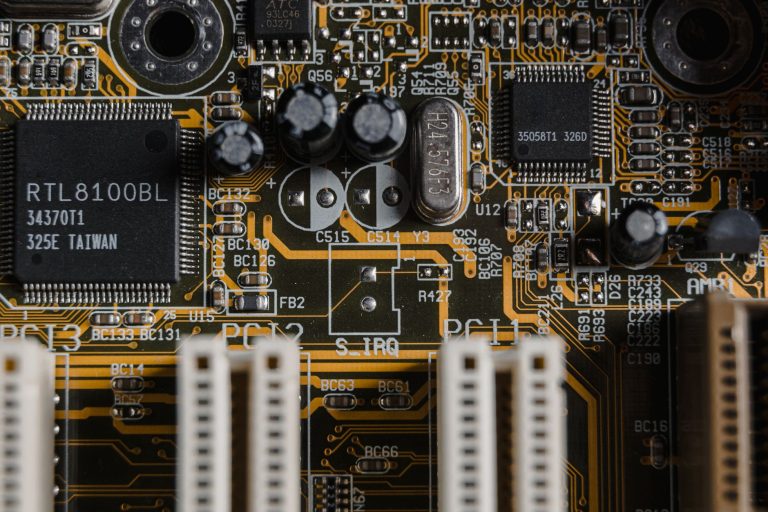
Source: ETTelecom – “Chinese court freezes $300 million of Nexperia assets in Wingtech case”. A Chinese court has frozen $300 million in assets belonging to Dutch semiconductor firm Nexperia, escalating a legal dispute with its Chinese parent company, Wingtech Technology. This action, reported on September 1, 2026, directly threatens the supply of critical discrete semiconductors used in power management, RF components, and signal conditioning across the global telecom infrastructure sector, from 5G base stations to fiber optic line cards and data center switches.
The Technical Core: Why Nexperia’s Components Are Indispensable to Telecom Networks

Nexperia, headquartered in Nijmegen, Netherlands, is not a manufacturer of leading-edge CPUs or GPUs. Its strategic value lies in its dominance of the market for essential, high-volume discrete semiconductors and logic devices. These components are the fundamental building blocks of electronic circuits, performing crucial functions often overlooked in discussions about advanced silicon. For telecom network operators and equipment manufacturers (OEMs), Nexperia’s portfolio is non-negotiable for several key applications:
- Power Management: Nexperia’s MOSFETs, IGBTs, and diodes are critical for efficient power conversion and regulation within base station power amplifiers, remote radio heads (RRHs), and power supplies for core network equipment. They ensure energy efficiency and thermal stability.
- RF and Signal Integrity: Devices like ESD protection diodes, TVS arrays, and RF transistors are vital for safeguarding sensitive 5G mmWave and sub-6GHz front-end modules from electrostatic discharge and voltage surges. They are embedded in antenna systems and transceivers.
- Logic and Interface: Logic gates, level translators, and interface ICs from Nexperia manage signal routing and protocol conversion within network switches, routers, and optical transport equipment (OTN).
The company operates major fabrication facilities in Hamburg, Germany, and Manchester, UK, alongside backend assembly and test sites in China, Malaysia, and the Philippines. In 2021, Wingtech Technology, a major Chinese electronics manufacturing services (EMS) and ODM player, completed its acquisition of Nexperia for approximately $6.3 billion. The current $300 million asset freeze, ordered by the Shanghai Financial Court, stems from a contractual dispute reportedly related to profit guarantees and intellectual property transfers between Wingtech and Nexperia’s former owner, Nexperia Holding. This legal action freezes bank accounts and shareholdings, directly impairing Nexperia’s operational liquidity and capital expenditure plans for capacity expansion—plans that are critical to meeting the surging demand from the telecom build-out.
Industry Impact: Immediate Disruption and Long-Term Strategic Reckoning for Operators and OEMs
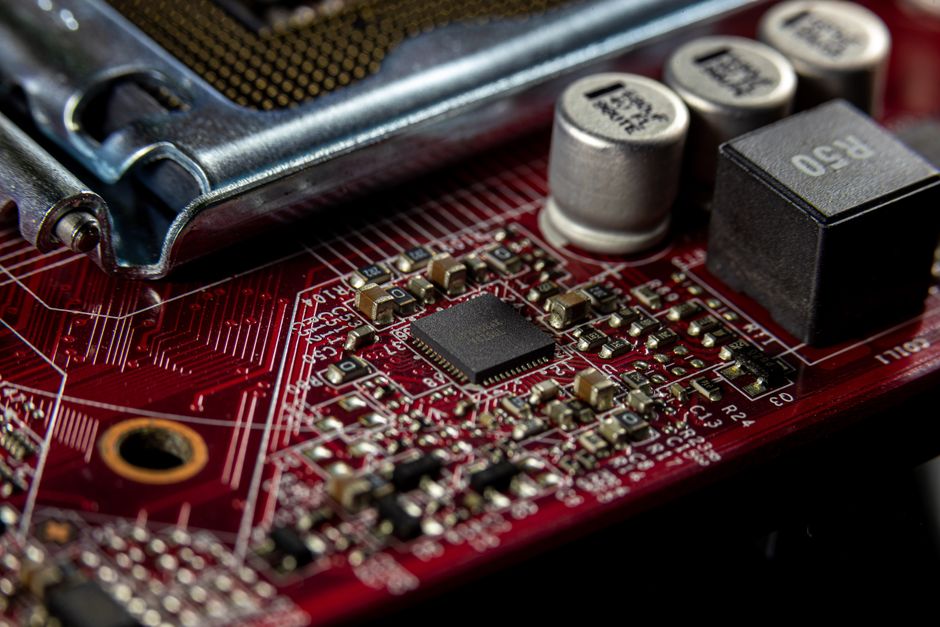
The immediate consequence for the telecom industry is supply chain volatility. Nexperia produces over 100 billion units annually. A sudden constriction in the availability of its components would create immediate bottlenecks for OEMs like Nokia, Ericsson, Huawei, ZTE, Cisco, and Ciena, who embed these parts in their line cards, power modules, and radio units. This is not a “nice-to-have” shortage; it’s a potential showstopper for hardware production lines.
For Mobile Network Operators (MNOs) and infrastructure builders, this translates to:
- Project Delays: Rollout schedules for 5G network densification, fiber-to-the-home (FTTH) expansions, and data center interconnect upgrades face immediate risk from delayed equipment deliveries.
- Cost Inflation: Scarcity will drive up gray market prices for these components, increasing the Bill of Materials (BOM) cost for OEMs, which will inevitably be passed on to operators through higher capital expenditure (CapEx).
- Quality and Security Risks: Operators may face pressure to approve alternative component sources hastily, potentially compromising long-term reliability or introducing untested parts into mission-critical infrastructure. The geopolitical dimension also raises questions about firmware integrity and supply chain sovereignty.
The dispute forces a stark strategic reassessment. The telecom industry’s reliance on a deeply intertwined, globalized semiconductor supply chain—where a Dutch firm’s Chinese-owned assets can be frozen by a Chinese court—is exposed as a critical vulnerability. Network operators, traditionally focused on spectrum and fiber, must now develop deeper semiconductor supply chain intelligence and consider dual-sourcing strategies for even the most commoditized components. This event will accelerate discussions around “friend-shoring” of critical electronics and increase scrutiny on the ownership structures of key suppliers.
Regional Implications: A Geopolitical Fault Line Through Global Telecom Infrastructure

This case is not an isolated commercial dispute; it is a manifestation of the broader techno-nationalist struggle between China, the US, and Europe over semiconductor supremacy and supply chain control. The telecom network equipment sector sits squarely in the crosshairs of this conflict.
For African and MENA telecom markets, which are heavily dependent on imported equipment from all major global OEMs, the implications are particularly acute:
- Dual-Vendor Dilemma: Many operators in these regions maintain a multi-vendor strategy, sourcing from both Western and Chinese vendors to ensure competition and mitigate political risk. A disruption affecting a component supplier like Nexperia, which sells to all camps, negates this strategy. It creates a systemic risk that no vendor choice can circumvent.
- Rollout Bottlenecks: Major national broadband and 5G initiatives across Africa, often funded by government or developmental bank loans with strict timelines, could be derailed by equipment shortages, delaying digital inclusion goals.
- Increased Scrutiny on Chinese Investment: The case highlights the legal and operational risks when critical global tech assets are under Chinese corporate control. This may lead regulators in Africa and the MENA region to impose stricter conditions or oversight on technology investments and equipment procurement, weighing not just cost but supply chain resilience and jurisdictional risk.
In Europe, the case will intensify debates around the EU’s Chips Act and its goals of achieving 20% global semiconductor market share by 2030. The vulnerability of a European tech champion like Nexperia—with its fabs in Germany and the UK—to extraterritorial legal actions from its owner’s home jurisdiction will be cited as a core argument for greater strategic autonomy and defensive investment in the semiconductor ecosystem.
Forward-Looking Analysis: Building Resilient Telecom Supply Chains in an Age of Fragmentation

The Nexperia-Wingtech saga is a watershed moment for telecom infrastructure strategy. It underscores that network resilience is no longer just about redundant fiber paths and backup generators; it is fundamentally about component-level supply chain security. Looking ahead, the industry will see several key developments:
- Operators as Supply Chain Auditors: Leading Tier-1 operators will mandate deeper transparency from their OEMs, requiring sub-tier supplier maps and risk assessments for critical components, moving beyond mere compliance to active supply chain management.
- Rise of “Certified” Alternative Sources: The industry may coalesce around qualifying and certifying alternative suppliers for key discrete semiconductors, led by consortiums like the O-RAN Alliance or the Telecom Infra Project (TIP), to create approved multi-source ecosystems.
- Inventory Strategy Shift: The just-in-time (JIT) inventory model will be supplemented by strategic buffer stocks of critical long-lead-time components, treated as a form of network insurance and factored into total cost of ownership models.
- Geopolitical Sourcing Clauses: Procurement contracts will increasingly include clauses related to the geographic diversification of component manufacturing and the legal jurisdiction of key suppliers, becoming a standard part of network equipment RFPs.
Ultimately, the $300 million asset freeze against Nexperia is a stark reminder that in the geopolitically charged landscape of the 2020s, the semiconductor supply chain is the soft underbelly of global telecom infrastructure. Network operators who fail to adapt their procurement, vendor management, and risk mitigation strategies to this new reality do so at the peril of their own network rollout plans and operational stability. The era of treating semiconductors as a purely commoditized, procurement-level concern is over; they are now a board-level strategic imperative.
About the Author